
Synonymous to trust, Accufresh is engaged in the exporting and supplying of the best selection of farm fresh vegetables and fruits to our international client base. Our Fresh Vegetables are handpicked from certified farms where no chemicals or toxic substances are used. We ensure there is no additives and health hazards involved in the vegetables and fruits, and they are ready to serve the purpose. We make sure that our vegetables and fruits stay fresh for long time without loss in its nutrients, colour, flavour, taste as well as shape throughout the transition, handling, and storage until it reaches to customers these can be consumed fresh and has high nutritious content.
Some of the major fruits and vegetables we deal in:
| Sr. No. | Fruits | Vegetables |
|---|---|---|
| 1 | Grapes | Potato |
| 2 | Mangoes | Onion |
| 3 | Pomegranate | Tomato |
| 4 | Custard Apple | Cauliflower |
| 5 | Apple | Cabbage |
| 6 | Banana | Beans |
| 7 | Mandarins | Peas |
| 8 | Sapota | Leafy Vegetables |
| 9 | Guava | Processed Vegetables |
| 10 | Other Fruits | Other Vegetables |
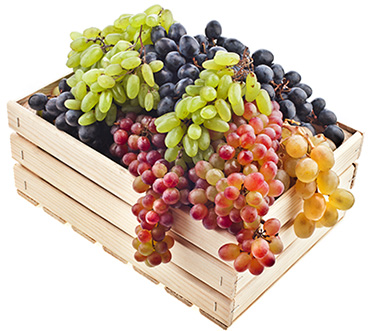
Grape (Vitis vinifera) is the most important Indian Fruit exported to the world as “Indian Fresh Table Grapes”. Indian grapes come in varied characteristics namely coloured, white, seeded, unseeded, large and small berries.
Principal commercial varieties are Thompson Seedless and its clones, Tas-e-Ganesh and Sonaka Seedless, Sharad Seedless (Black Seedless), Flame Seedless (Red Seedless). Thompson Seedless and its derivatives like Sonaka, Tas-A-Ganesh are popular in Maharashtra, Northern Karnataka, Andhra Pradesh regions.
Thompson Seedless is the ruling grape variety occupying 55% of the area with its clones and forms the major part of our export too.
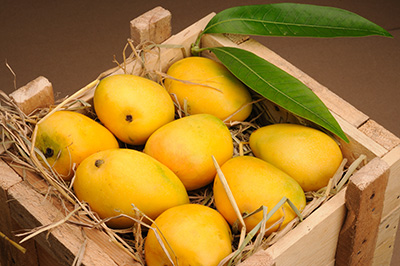
Mango (Mangifera indica Linn) is the most important fruit of India and is known as “King of fruits”. Mangifera indica - the "common mango" or "Indian mango"—is the only mango tree commonly cultivated in many tropical and subtropical regions.
Indian mangoes come in various shapes, sizes and colours with a wide variety of flavour, aroma and taste. The Indian mango is the special product that substantiates the high standards of quality and bountiful of nutrients packed in it. A single mango can provide up to 40 percent of the daily dietary fibre needs – a potent protector against heart disease, cancer and cholesterol build –up .In addition, this luscious fruit is a warehouse of potassium, beta- carotene and antioxidants.
Varietal characteristics of Exported mangoes:
| Variety | Characteristics |
|---|---|
| Alphonso | This variety is medium in size, ovate oblique in shape and orange yellow in colour. The pulp is yellow to orange in colour. It is soft, firm and fibreless. It is a mid-season variety. |
| Banganpalli | The flesh is firm to meaty, fibreless. Fruit is large in size and obliquely oval in shape. The colour of fruit is golden yellow. Good keeping quality and a mid season variety. |
| Chausa | Fruit is large in size, ovate to oval oblique in shape and light yellow in colour. It is a late variety. |
| Dashehri | Fruit size is medium, shape is oblong to oblong-oblique and fruit colour is yellow. The pulp is firm and fibreless and a mid season variety. |
| Langra | Fruit is of medium size, ovate shape and lettuce green in colour.The lemon-yellow flesh is juicy and flavourful. It is scarcely fibrous, a mid season variety. |
| Totapuri | Fruit size is medium to large, shape is oblong with necked base and colour is golden yellow. Flesh is cadmium yellow and fibreless, a mid season variety. |
| Kesar | Fruits are medium sized, flesh is sweet and fibreless. Colour is apricot yellow with red blush, an early season variety. |
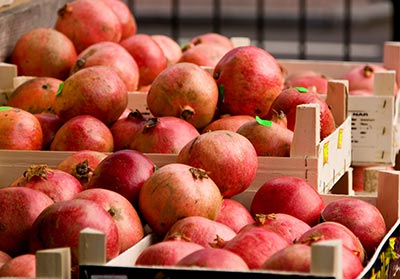
Pomegranate (Punica granatum) is one of the commercially important fruit crops of India. It is native to Iran (Persia). Pomegranate is cultivated commercially only in Maharashtra.
We procure the best quality pomegranates for domestic and export purposes from the farms of Nasik, Sangli, Solapur etc. The fruits are sourced from trusted and well known cultivators. These cultivators grow fruits at well equipped farmlands with fertilizer which are non toxic to the body as well as environment. We also, process these fruits with detailed care so as supply only healthy eatable fruits. The freshness of the fruit makes it best suitable to make juice and jams. These fruits are offered by us at reasonable market rates with standard packaging.
The major export variety of pomegranate has following features.-
Pomegranate variety: BHAGWA,
Fruit Size: 200 grams and above,
Packing Count: 12-18 fruits per 4 kg carton
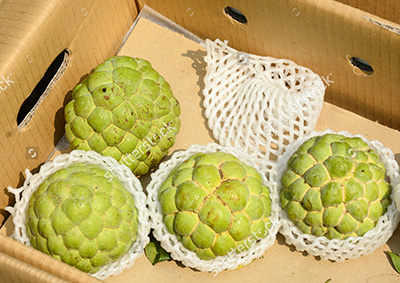
Custard Apple (Annona Squamosa), is a delicious dry land fruit. The fruit are low in saturated fat, cholesterol, sodium and high in vitamin C, manganese, Iron and Potassium. We are engaged in the Exporting and Supplying of best quality Fresh Custard Apple that is highly appreciated by clients worldwide. The Fresh Custard Apple range is widely acclaimed by the clients due to its mesmerizing taste and diverse usage in concocting an array of dishes. We offer the Fresh Custard Apple range at competitive prices to valued clients.
Some names of Export Variety their Salient Features & Growing Areas
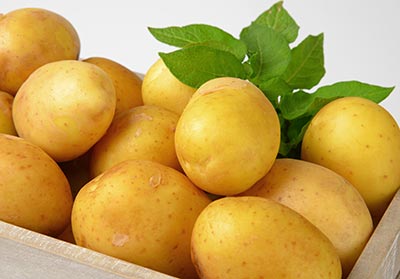
We serve freshest potato as we are the most demanded vegetable potato suppliers and exporters in India. In addition, our potatoes are of very low price that will fit into customers’ budget. We are a leading Indian exporters and suppliers of Fresh Potato to various countries. We exports best quality fresh potato to acorss the world. We are supplying and exporting all variety of fresh potatoes.
Features:
Varieties available:
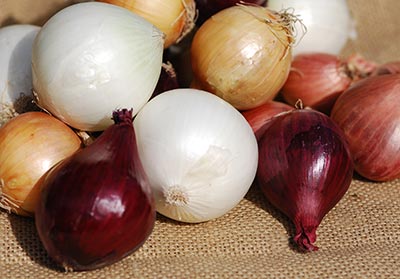
Onion parts the major commodity of Accufresh export, as Onion (Allium Cepa) is the only vegetable produced and consumed in large quantity in and all over world. India is the second largest onion growing country in the world. Indian onions are famous for their pungency and are available round the year.
Being a sole largest producer and exporter, Maharashtra grows following varieties:
| Sr. No. | Variety | Season | Color |
|---|---|---|---|
| 1 | N-53 | Kharif | Red |
| 2 | Baswant-780 | Kharif | Red |
| 3 | N2-4-1 | Rabi | Brick-Red |
| 4 | N-257-9-1 | Rabi | White |
| 5 | Phule Safed | All year | White |
| 6 | Phule Suvarna | Late Kharif /Rabi | Yellow Red |
| 7 | AFDR | Late Kharif /Rabi | Dark Red |
| 8 | AFLR | Rabi | Light Red |
Accufresh categorised the requirements of our worldwide clients’ as per their specifications:
| Sr. No. | Country | Colour | Size | Remark |
|---|---|---|---|---|
| 1 | Middle East and Gulf(Dubai, Sharjah, Doha, Muscat, Bahrain, Dammam, Saudi Arabia, Kuwait) | Light red to dark red | 40 – 60 mm | Globular /Pungent |
| 2 | Malaysia, Singapore, Port Kelang & African Ports Globular /Pungent | Dark red to violet | 25 – 30 mm | Globular /Pungent |
| 3 | Sri Lanka | Dark red to light red | 25 – 30 mm | Globular or Oval |
| 4 | Bangladesh, Pakistan & Nepal | Light red to dark red | 25 – 30 mm | Globular /Pungent |
| 5 | Europe | Yellowish / brown | 60 – 70 mm | Globular /Less Pungentt |
| 6 | Japan | Yellowish / brown | 60 – 70 mm | Globular /Less Pungentt |
India's diverse climate ensures availability of all varieties of fresh vegetables. It ranks second in fruits and vegetables production in the world, after China. Vegetables are excellent source of vitamins, particularly niacin, riboflavin, Thiamin and vitamins A and C. They also supply minerals such as calcium and iron besides proteins and carbohydrates. Vegetables combat under nourishment and are known to be cheapest source of natural protective tools.
Major Vegetables we offer to the world are:
| Sr. No. | Vegetable | Botanical Name |
|---|---|---|
| 1 | Cabbage | Brassica oleracea |
| 2 | Cauliflower | Brassica botrytis |
| 3 | Tomato | Lycopersicon esculentum |
| 4 | Cluster bean | Cyamopsis tetragonoloba |
| 5 | Bottle gourd | Lagenaria siceraria |
| 6 | Bitter gourd | Momordica charantia |
| 7 | Drumstick | Moringa oleifera |
| 8 | French beans | Phaseolus vulgaris |
| 9 | Peas | Pisum sativum |
| 10 | Broad beans | Vicia faba |
| 11 | Small onion | Allium aggregatum |
Indian spices are the most sought-after globally, given their exquisite aroma, texture, taste and medicinal value. India has the largest domestic market for spices in the world. India is the world's largest producer, consumer and exporter of spices; the country produces about 75 of the 109 varieties listed by the International Organization for Standardization (ISO) and accounts for half of the global trading in spices.
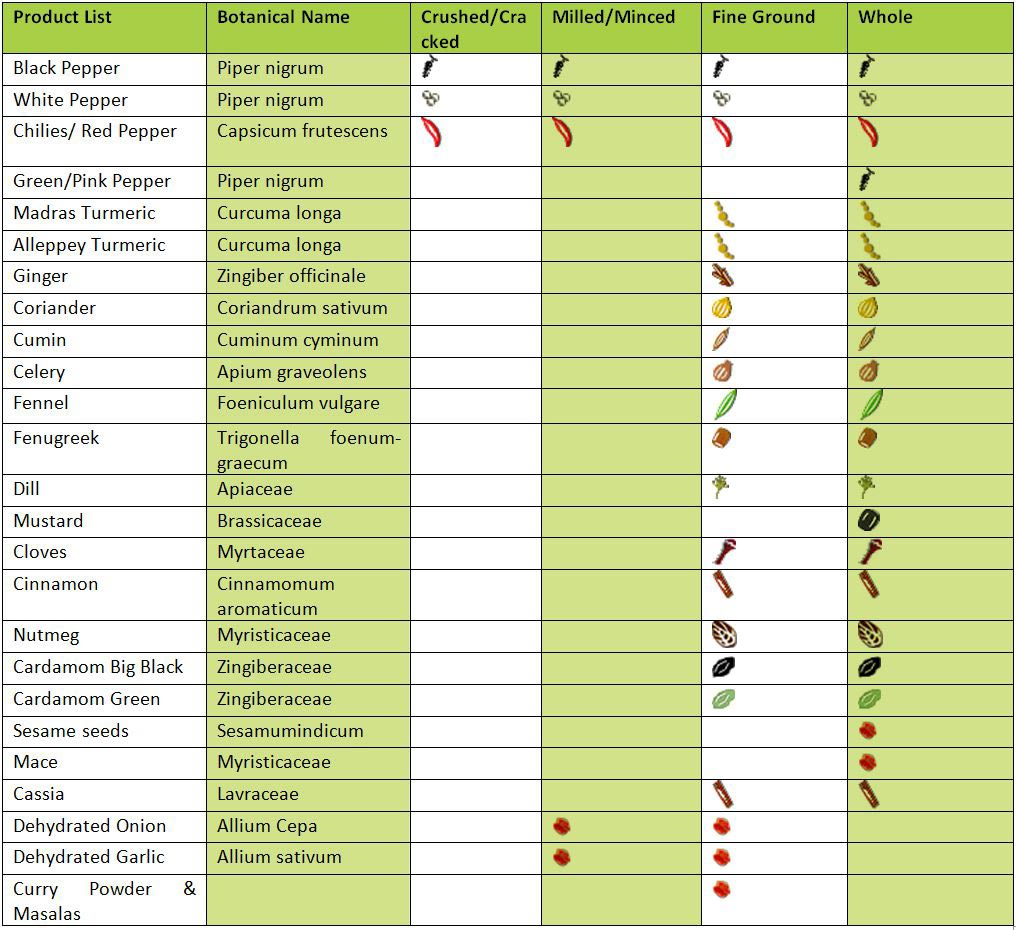
Accufresh spices is a one stop shop for all spices in the Indian spice range. We offer these in whole, milled, ground form.
Some of the major spices we specialise in International trading are:
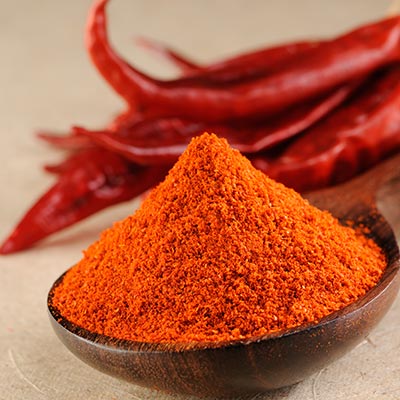
The most commonly cultivated spice of India makes the Indian Chilly as one of the exclusive identities of the nation at the international arena.
The reason being the exclusive quality that contributes to its colour which is its individuality and its distinctive range of pungency levels which is another feature of this spice. India is the world's largest producer, consumer and exporter of chillies in the world. India also has the largest area under chillies in the world. Chillies are the most common spice cultivated in India.
Almost all the states of India cultivate Chilly. The Indian Chilly cultivating states are Andhra Pradesh, Karnataka, Maharashtra, Madhya Pradesh, Orissa, West Bengal, Rajasthan and Tamil Nadu.
Types of chillies famous for Export:
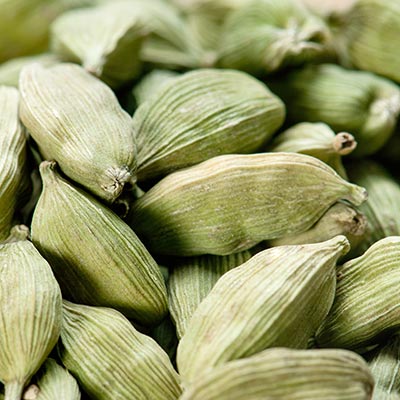
Cardamom of commerce is the dried ripe fruit (capsules of cardamom plant) often referred as the “Queen of Spices” because of its very pleasant aroma and taste. Cardamom is a perennial, herbaceous, rhizomatous plant. Indian cardamom is offered to the international markets in different grades: 'Alleppey Green Extra Bold' (AGEB), 'Alleppey Green Bold' (AGB) and 'Alleppey Green Superior' (AGS) are names that register instant appeal worldwide.
Kerala is the origin of most of the Cardamom produced in India, followed by Karnataka and Tamilnadu.
Types of Cardamom for Export:
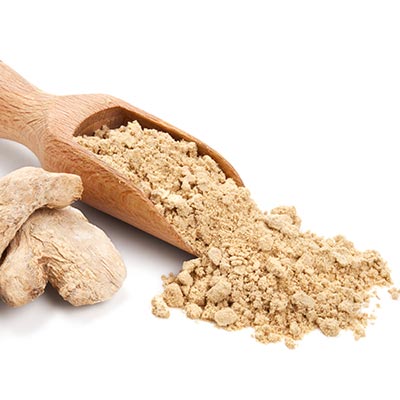
Ginger is the underground rhizome of a plant with Lanceolote leaves and spikes of yellow flowers, borne on stems. Dried ginger is obtained by peeling off the outer skin of the rhizome and drying in the sun after cleaning. Bleached ginger is obtained by coating the dried ginger with a solution of lime. The uncoated variety is called 'unbleached ginger'.
Fresh Ginger is extremely important in oriental and Indian food. It is used to flavour the cooking oil before you toss everything else for stir-frying. It is considered as a restorative, stimulant and a strong flavouring agent. Ginger is reputed to cure ulcers when chewed in small doses. It amply enhances your appetite when blended with other spices.
The characteristic odor and flavor of ginger is caused by a mixture of zingerone, shogaols and gingerols, volatile oils that compose one to three percent of the weight of fresh ginger.
The congenial climate and the rich healthy soil of Kerala help to produce the finest quality ginger in the world called the “Cochin Ginger”. Other cultivars are
Assam, Maran, Kuruppampadi, Ernad, Wynad, Himachal and Nadia.
Types of Ginger for Export:
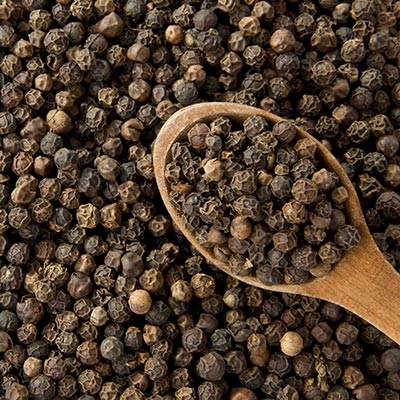
Black Pepper is one of the oldest and best-known spices in the world. Indigenous to India pepper is popularly known as the King of Spices. From time immemorial, India has always reigned supreme in the production & export of this most exotic and renowned spice in the world. White pepper is produced through a process of removing outer layer.
The main cultivars of black pepper are - Karimunda is the most popular of all the established cultivars. The other important cultivars are Kottanadan, Narayakkodi, Aimpiriyan, Neelamundi, Kuthiravally, Balancotta and Kalluvally.
Types of Black Pepper for Export :
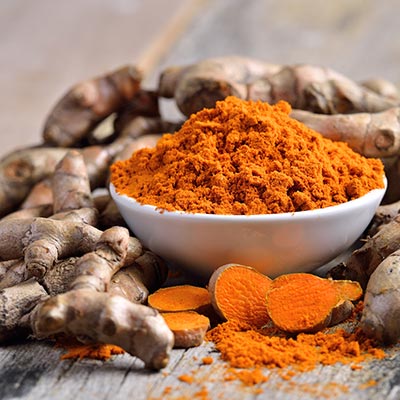
Turmeric, with its brilliant yellow colour, has been used as a dye, medicine, as well as a flavouring ingredient since ancient times. Turmeric is one of the key ingredients in many curries for adding colour and flavour.
The main turmeric cultivating states in India are Andhra Pradesh, Tamil Nadu, Karnataka, Kerala, Orissa, West Bengal, Gujarat and Maharashtra.
Types of Turmeric for Export:
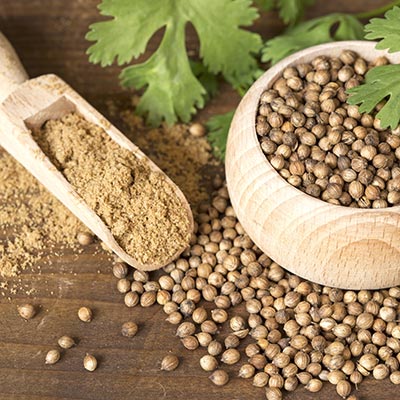
Among one of the first spices used by mankind, coriander seeds, of coriandrum sativum, which belongs to the parsley family. The coriander seeds are almost round in shape and brown to yellowish red in colour.
It is a fragrant spice, with a mild, distinctive taste. It is widely used as a condiment in foods, beverages, marinades, desserts and sweet pastries and also in American cigarettes. It also has a great medicinal value.
In India it is cultivated mainly in Gujarat, Rajasthan, Tamil Nadu, Andhra Pradesh, Madhya Pradesh and Uttar Pradesh.
Types of Coriander seeds for Export:
Spice Oleoresins are essentially the concentrated liquid form obtained from spices. This spice derivative has the same character and property of spice it is obtained from. Oleoresins are popularly used for food flavouring in the food processing industry.
Spice oils are actually concentrated liquids that are obtained from the spices that reproduce the character of the respective spice fully. Our essential oils are extracted from a number of herbs and plants and these are blended for fragrance.
India dominates the global market for spice oleoresin, which is in big demand from processed food and fragrance industries that now mostly prefer natural colouring and flavouring agents to artificial ones as consumers become increasingly health conscious.
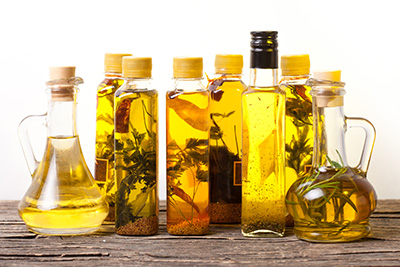
The range of oils and oleoresins we are/will be able to supply:
Oleoresins
| Pepper Oleoresins | Cardamom Oleoresins | Chilli Oleoresins |
| Capsicum Oleoresins | Mustard Oleoresins | Ginger Oleoresins |
| Turmeric Oleoresins | Coriander Oleoresins | Cumin Oleoresins |
| Garlic Oleoresins | Fennel Oleoresins | Fenugreek Oleoresins |
| Mace Oleoresins | Mustard Oleoresins | Clove Oleoresins |
India is the world's second largest producer of Rice, Wheat and other cereals. The huge demand for cereals in the global market is creating an excellent environment for the export of Indian cereal products. We offer exclusive range of seeds of cereals – wheat, rice, maize, which are appreciated for its enhanced nutritional content. These are sown in an ultra hygienic condition on fertile lands. Our range is free from any kind of impurity or foreign body to offer highly qualitative range. Our cereals seeds are packed under rigorous quality control to offer an exclusive range.
Few Major cereals products we source across globe are:-
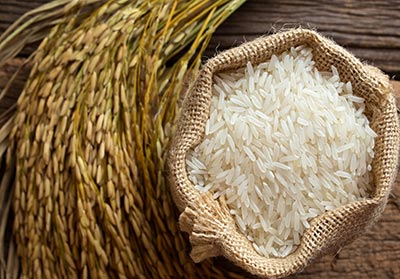
Any rice other than basmati rice is called Non-basmati rice. In the world it has been reported that there are 10000 varieties of rice, the maximum number being in India. Rice is grown from Kasmir to Kanyakumari and Amritsar to Nagaland almost in every district with variations in area of cultivation.
“Basmati” is long grain aromatic rice grown for many centuries in the specific geographical area, at the Himalayan foot hills of Indian sub-continent, blessed with characteristics extra- long slender grains that elongate at least twice of their original size with a characteristics soft and fluffy texture upon cooking, delicious taste, superior aroma and distinct flavour, Basmati rice is unique among other aromatic long grain rice varieties. Indian Basmati rice has a very different aroma and taste from Chinese and Thai Jasmine rice. We are specialised in Pusa Basmati 1121, Basmati 217, Karnal Local/ Taraori Basmati, Basmati 370, Type-3 (Dehradooni Basmati), Pusa Basmati-1, , Punjab Basmati-1, Haryana Basmati- 1, Kasturi.
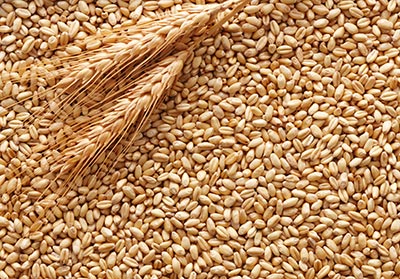
India is the second largest producer of wheat in the world. With the onset of the green revolution and other developments in the agricultural sector, the Wheat Business in India was given a major boost. Wheat is a cereal grain, is used in many forms like flour, semolina, malt, crushed or cut into cracked wheat; parboiled (or steamed), dried etc. and is major ingredient in such foods as bread, porridge biscuits, Muesli, pancakes, pies, pastries, cakes, cookies etc.
Wheat is the only grain with sufficient gluten content to make raised or leavened loaf of bread. Gluten refers to the proteins found in wheat endosperm (a type of tissue produced in seeds that's ground to make flour). Gluten both nourishes plant embryos during germination and later affects the elasticity of dough, which in turn affects the chewiness of baked wheat products. Gluten is actually composed of two different proteins: gliadin (a prolamin protein) and glutenin (a glutelin protein).
An Initiative by 